N-BUTANOL · CAS 71-36-3
BASF n-Butanol for butyl acrylate, butyl acetate, plasticisers and coating solvents. Supplied as BASF n-Butanol grade material by Ascent Group Co., Ltd.
01 / PRODUCT
BASF n-Butanol is the normal butanol produced under the BASF brand and supplied by Ascent Group as BASF n-Butanol grade material. Chemically it is a straight-chain primary alcohol (CAS 71-36-3) with the formula C₄H₁₀O, a clear, colourless liquid with a mild alcoholic odour.
Its four-carbon chain and single hydroxyl group make it a reactive intermediate for esterification and etherification, and a medium-boiling solvent with a boiling point of 117.7 °C. It is partly miscible with water and fully miscible with common organic solvents.
02 / DATA
Physical and chemical data for BASF n-Butanol are listed below.
| Property | Value | Unit | Method |
|---|---|---|---|
| Molecular weight | 74.12 | g/mol | Calculation |
| Boiling point | 117.7 | °C | Distillation |
| Melting point | −89.8 | °C | DSC |
| Density (20 °C) | 0.810 | g/cm³ | Pycnometer |
| Flash point | 35 | °C | Closed cup |
| Refractive index (20 °C) | 1.3993 | — | Refractometry |
| Viscosity (20 °C) | 2.95 | mPa·s | Viscometry |
| Water solubility (20 °C) | 7.7 | g/100 mL | Gravimetry |
| Appearance | Clear colourless liquid | — | Visual |
03 / USES
From acrylate monomers to formulated solvents, BASF n-Butanol serves six core industrial uses.
Esterification with acrylic acid gives butyl acrylate, the monomer used in waterborne coatings, pressure-sensitive adhesives and textile finishing emulsions.
Reaction with acetic acid produces butyl acetate, a medium-boiling solvent for lacquers, printing inks and nitrocellulose coatings with controlled evaporation.
n-Butanol is esterified with phthalic anhydride to make dibutyl phthalate, a plasticiser for cellulose-based resins and flexible polymer compounds.
Reaction with ethylene oxide yields butyl glycol ethers, used as coalescing agents in waterborne paints and as components of industrial cleaning formulations.
As a medium-boiling solvent, n-Butanol improves flow and levelling in alkyd resin coatings, baking enamels and solvent-borne printing inks.
Its limited water miscibility makes n-Butanol an extraction medium for oils, flavours, biochemical products and pharmaceutical intermediates.
04 / SOURCING
A boiling point of 117.7 °C and a flash point of 35 °C give formulators a predictable evaporation window for baking enamels, alkyd coatings and solvent blends.
Ascent Group supplies BASF n-Butanol grade material backed by BASF's manufacturing and quality controls, so incoming inspection and formulation validation stay consistent lot to lot.
Our team answers questions on handling, storage, material compatibility and documentation for BASF n-Butanol in esterification, coatings and extraction processes.
05 / COMPANY
Ascent Group Co., Ltd works with BASF n-Butanol as a dedicated product line, supporting buyers in acrylate and acetate esters, plasticisers and solvent formulation.
Lot identity, container integrity and accompanying documentation are checked against the order before dispatch, so the grade specified is the grade received.
Grade availability, shipment coordination and technical questions are handled by one sales contact, keeping the inquiry chain short for industrial buyers.
06 / HANDLING
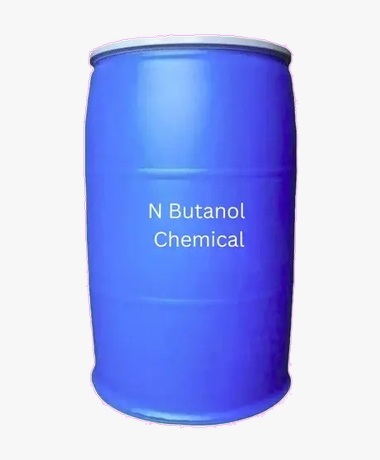
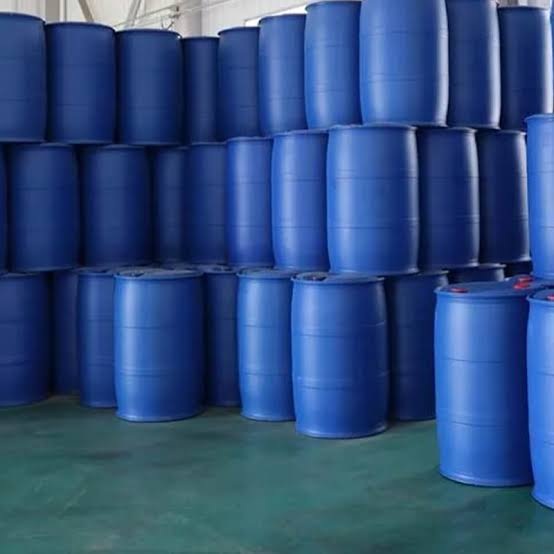
BASF n-Butanol is a flammable liquid handled in sealed steel drums and bulk tank containers. Keep containers closed and store in a cool, well-ventilated area away from heat, sparks and direct sunlight.
Ground transfer equipment during decanting, avoid open flames and provide ventilation to control vapour. Handle with standard industrial hygiene measures and consult the safety data sheet for the grade supplied.
07 / QUESTIONS
The CAS registry number is 71-36-3. n-Butanol is a straight-chain primary alcohol with the formula C₄H₁₀O and a molar mass of 74.12 g/mol.
It is esterified to butyl acrylate and butyl acetate, used to make dibutyl phthalate plasticisers and butyl glycol ethers, and applied as a medium-boiling solvent in coatings and inks.
Yes. n-Butanol has a flash point of 35 °C in a closed cup and forms flammable vapour mixtures with air, so it must be handled away from ignition sources.
Butan-1-ol (n-butyl alcohol) is classified under HS code 2905.13, the customs subheading for saturated monohydric acyclic alcohols.
It is only partly miscible: about 7.7 g dissolves in 100 mL of water at 20 °C. This limited miscibility is why n-butanol works as an extraction solvent for oils and biochemical products.
07 / CONTACT
Ready to discuss BASF n-Butanol for your acrylate, acetate or coatings application? Contact Yuna Yang for pricing, samples and technical data.
Ask about BASF n-Butanol availability, packaging, documentation and shipment options for your region.
 Scan to chat with Yuna Yang on WhatsApp.